




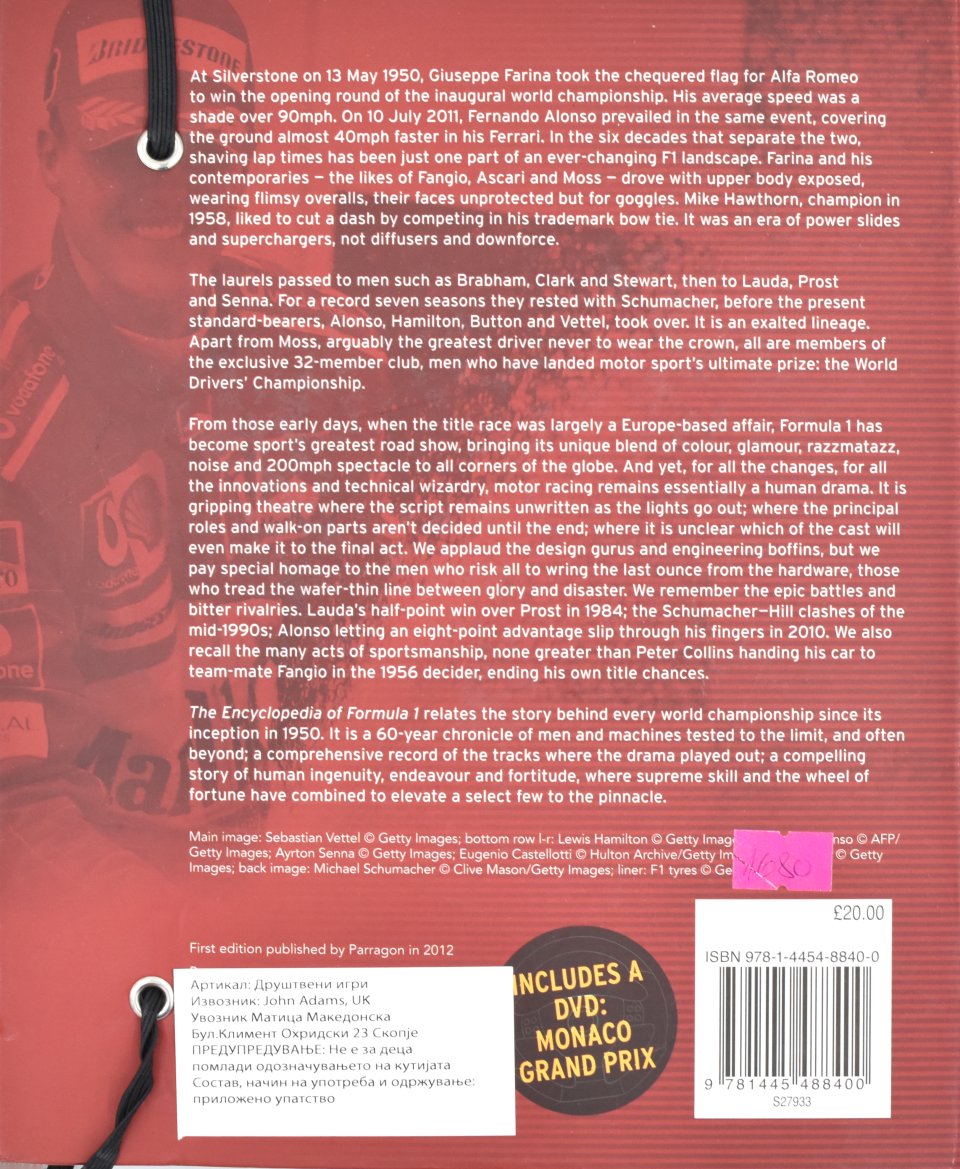
At Silverstone on 13 May 1950, Giuseppe Farina took the chequered flag for Alfa Romeo to win the opening round of the inaugural world championship. His average speed was a shade over 90mph. On 10 July 2011, Fernando Alonso prevailed in the same event, covering the ground almost 40mph faster in his Ferrari. In the six decades that separate the two, shaving lap times has been just one part of an ever-changing F1 landscape. Farina and his contemporaries – the likes of Fangio, Ascari and Moss – drove with upper body exposed, wearing flimsy overalls, their faces unprotected but for goggles. Mike Hawthorn, champion in 1958, liked to cut a dash by competing in his trademark bow tie. It was an era of power slides and superchargers, not diffusers and downforce.
The laurels passed to men such as Brabham, Clark and Stewart, then to Lauda, Prost and Senna. For a record seven seasons they rested with Schumacher, before the present standard-bearers, Alonso, Hamilton, Button and Vettel, took over. It is an exalted lineage. Apart from Moss, arguably the greatest driver never to wear the crown, all are members of the exclusive 32-member club, men who have landed motor sport’s ultimate prize: the World Drivers’ Championship.
From those early days, when the title race was largely a Europe-based affair, Formula 1 has become sport’s greatest road show, bringing its unique blend of colour, glamour, razzmatazz, noise and 200mph spectacle to all corners of the globe. And yet, for all the changes, for all the innovations and technical wizardry, motor racing remains essentially a human drama. It is gripping theatre where the script remains unwritten as the lights go out; where the principal roles and walk-on parts aren’t decided until the end; where it is unclear which of the cast will even make it to the final act. We applaud the design gurus and engineering boffins, but we pay special homage to the men who risk all to wring the last ounce from the hardware, those who tread the wafer-thin line between glory and disaster. We remember the epic battles and bitter rivalries. Lauda’s half-point win over Prost in 1984; the Schumacher-Hill clashes of the mid-1990s; Alonso letting an eight-point advantage slip through his fingers in 2010. We also recall the many acts of sportsmanship, none greater than Peter Collins handing his car to team-mate Fangio in the 1956 decider, ending his own title chances.
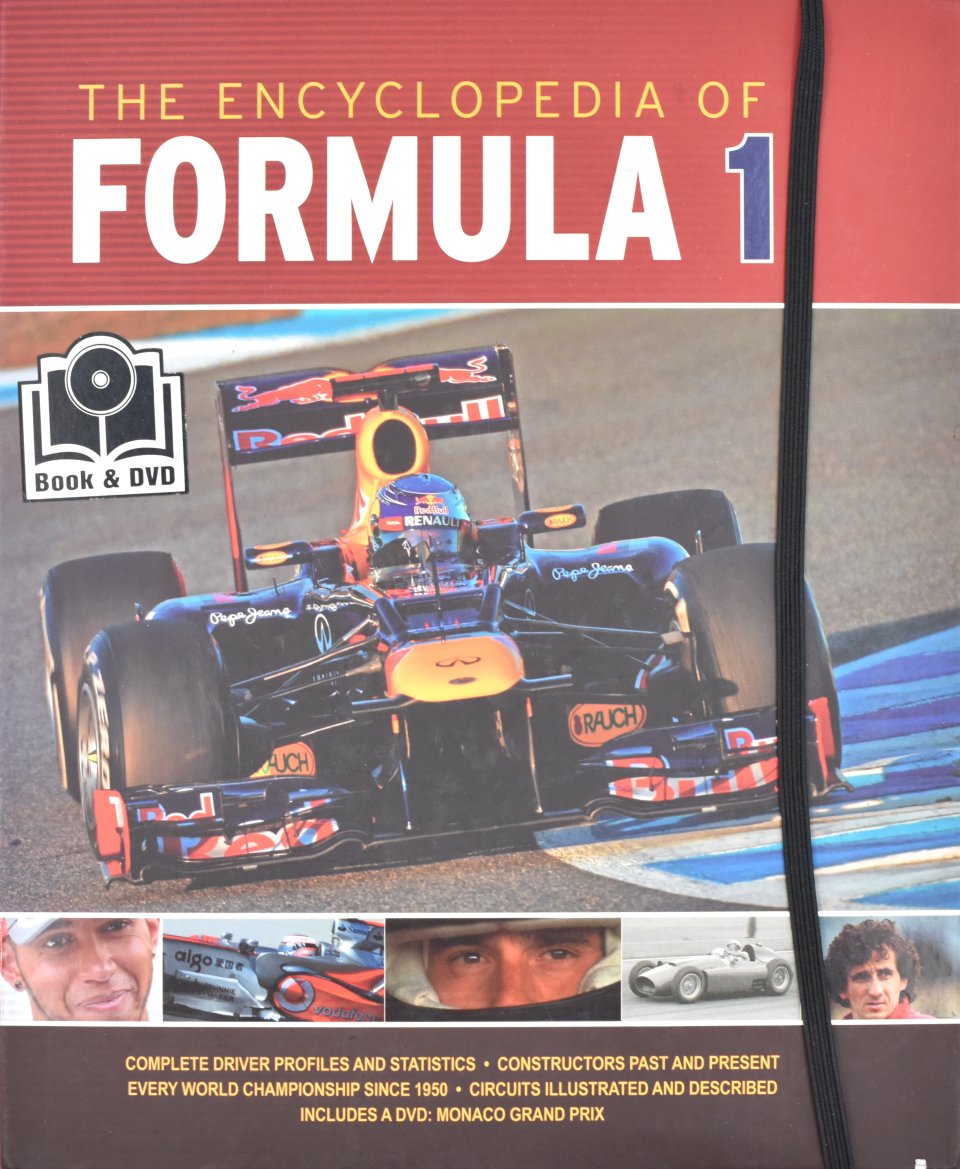
The Encyclopedia of Formula 1 relates the story behind every world championship since its inception in 1950. It is a 60-year chronicle of men and machines tested to the limit, and often beyond; a comprehensive record of the tracks where the drama played out; a compelling story of human ingenuity, endeavour and fortitude, where supreme skill and the wheel of fortune have combined to elevate a select few to the pinnacle.